


Benefits of Matcha Green Tea vs Regular Tea
What Makes Matcha Different From Regular Green Tea?
For the benefits of Matcha Green Tea, matcha differs from regular green tea because the leaves are shade-grown before harvest, then stone-ground into a fine powder that you whisk and consume whole. Meaning you ingest the entire leaf. Because you drink the whole leaf rather than steeping and straining it, matcha delivers a higher concentration of caffeine, L-theanine, and antioxidants per serving.
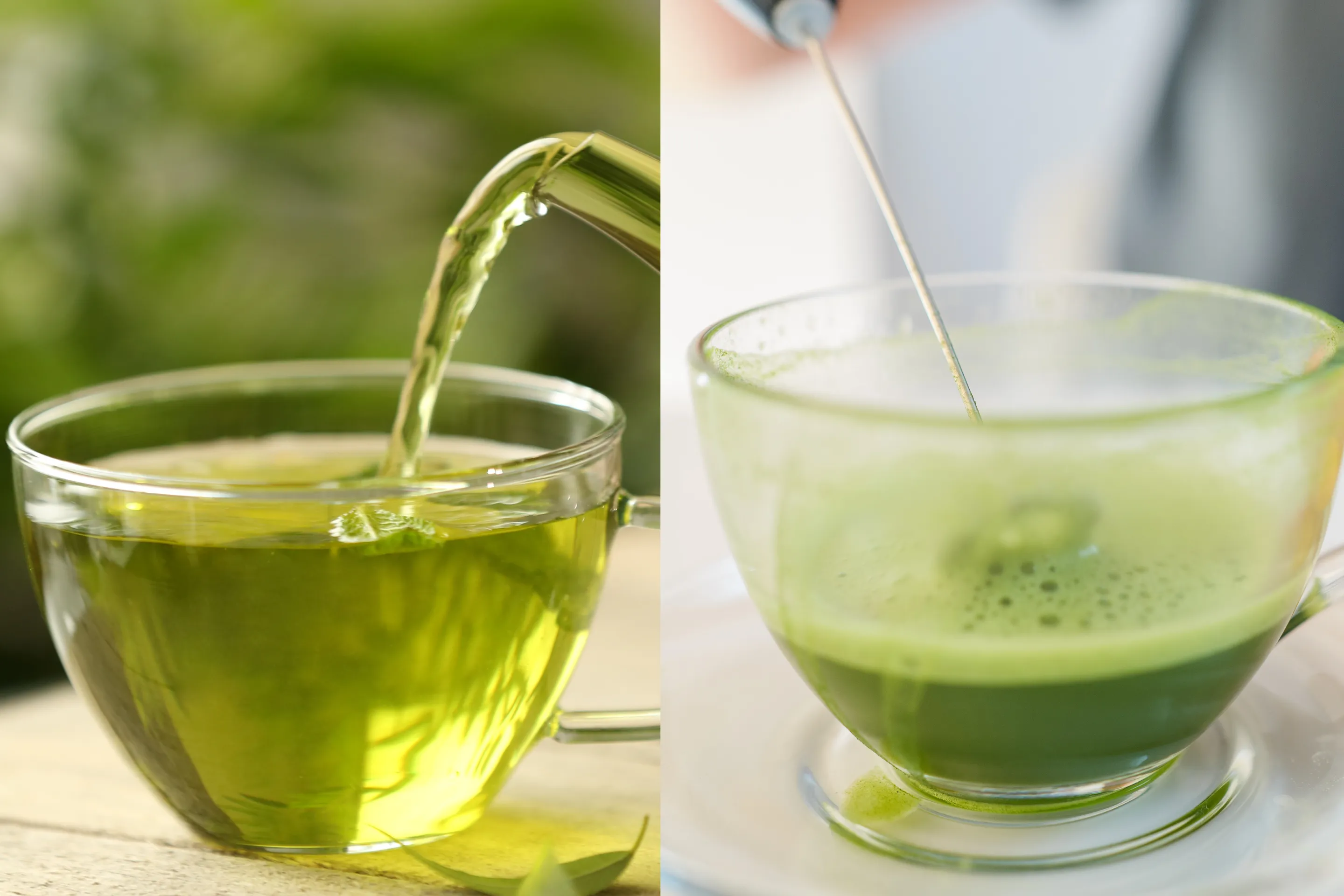
Matcha and regular green tea both originate from the same Camellia sinensis plant. The critical difference lies in how each is grown and processed. And those differences change everything about flavor, nutrition, and preparation. Regular green tea leaves are harvested and steeped in water, then strained before drinking. Matcha leaves, by contrast, are shade-grown, steamed, and stone-ground into a fine powder that gets whisked directly into water. Customers who drink matcha consume the entire leaf — not just a steeped infusion.
Why does shade-growing matter for matcha?
Growing matcha leaves under partial shade protects the theanine naturally present in the plant. Theanine is an amino acid responsible for matcha's signature umami flavor. That deep, savory-sweet quality that sets it apart from the lighter, grassier taste of steeped green tea.
How do the two teas compare at a glance?
|
Feature |
Green Tea |
Matcha |
|---|---|---|
|
Plant source |
Camellia sinensis |
Camellia sinensis |
|
Growing method |
Full sun |
Shade-grown |
|
Preparation |
Steep and strain |
Whisk powder into water |
|
What you consume |
Infused water |
Whole leaf |
|
Flavor profile |
Light, grassy |
Rich, umami, creamy |
Alpha Addict Coffee Company's Matcha Wolf is a ceremonial-grade matcha crafted specifically for a smooth, creamy whisk. Delivering that luminous green cup that reflects the Benefits of Matcha Green Tea at their fullest expression.
How Do Caffeine and Nutrients Compare Between the Two?
Matcha carries more caffeine and a stronger concentration of nutrients than steeped green tea. The key reason is simple: matcha drinkers consume the entire leaf, not just a water extract.
|
Property |
Green Tea |
Matcha |
|---|---|---|
|
Caffeine Level |
Low |
High |
|
Nutrient Concentration |
Moderate |
Stronger |
|
Antioxidant Density |
High |
Higher |
|
Consumption Method |
Steeped and strained |
Whole leaf consumed |
Why Does Consuming the Whole Leaf Matter?
Steeping green tea pulls some nutrients into the water. The leaf itself — and everything locked inside — gets discarded. Matcha delivers the Benefits of Matcha Green Tea in full because the entire ground leaf enters the cup. More caffeine and more L-theanine reach the drinker with every serving.
Does Matcha Have More Antioxidants Than Green Tea?
Matcha's processing method concentrates nutrients rather than diluting them. Because the leaves are stone-ground into a fine powder. Whisked directly into water, matcha typically carries a stronger concentration of antioxidants than a standard cup of steeped green tea. Regular green tea is still antioxidant-rich — matcha simply takes that density further. For coffee lovers exploring matcha, Alpha Addict Coffee Company's Matcha Wolf is crafted as a ceremonial-grade option designed for traditional whisking or mindful daily rituals.
What Flavor and Ritual Differences Should You Expect?
Matcha delivers a smooth, rich flavor built around umami and a gentle hint of bitterness. Steeped green teas, by contrast, span a wide spectrum. From light and fruity to deep and grassy — depending on the variety and origin.
How Does Matcha Taste Compared to Green Tea?
Matcha's flavor profile is distinctly layered. The umami note sits at the center, supported by a natural creaminess that steeped green tea rarely matches. Green tea drinkers who prefer something brighter and more delicate may find matcha's richness a noticeable shift. Neither profile is superior — they simply serve different palates.
What Does a Matcha Ritual Actually Look Like?
Traditional matcha preparation involves whisking the powder into hot water until a frothy, luminous green cup forms. Alpha Addict Coffee Company's Matcha Wolf captures this experience precisely. The blend is crafted to deliver elegant umami, natural sweetness, and a clean, refreshing finish. Matcha Wolf suits both formal ceremonial preparation and quieter, mindful daily rituals.
Here is a quick side-by-side comparison:
|
Attribute |
Matcha |
Steeped Green Tea |
|---|---|---|
|
Flavor |
Umami-rich, creamy |
Light to grassy |
|
Preparation |
Whisked powder |
Steeped and strained |
|
Ritual feel |
Ceremonial, intentional |
Casual, flexible |
The benefits of matcha green tea extend beyond nutrition. The preparation ritual itself encourages a slower, more deliberate start to the day. Matcha green tea stands apart through its whole-leaf consumption and ceremonial preparation. Sustained energy profile—a ritual that transforms your daily beverage into a mindful practice. Whether you're seeking an alternative to coffee or exploring the nuanced world of tea, matcha delivers a unique experience that honors both tradition and modern wellness. For adventurers and contemplatives alike, this vibrant powder invites you to slow down and savor the moment. Embrace a beverage as intentional as the life you're building.
Final Thoughts
What makes matcha different from regular green tea ultimately comes down to how each is grown, processed, and consumed. Matcha is shade-grown, stone-ground into a fine powder, and whisked whole into water, giving it higher caffeine, more L-theanine, denser antioxidants, and a rich umami flavor. Regular green tea is grown in full sun, steeped, and strained, leaving behind a lighter, grassier cup with fewer of the leaf's nutrients. If that whole-leaf richness and ceremonial ritual appeal to you, Alpha Addict Coffee Company's Matcha Wolf offers a ceremonial-grade way to experience it firsthand.
FAQ
What makes matcha different from regular green tea?
Matcha leaves are shade-grown, stone-ground into a fine powder, and whisked directly into water. Drinkers consume the entire leaf rather than a steeped and strained infusion. (Source: Art of Tea)
Why does matcha contain more caffeine than regular green tea?
Drinking the whole ground leaf delivers a higher concentration of caffeine and L-theanine per serving. Steeping and straining green tea leaves most nutrients behind in the discarded leaf.
Why does shade-growing matter for matcha?
Shade cuts the sunlight matcha plants receive in the weeks before harvest, which slows photosynthesis and lets theanine build up in the leaves instead of converting to catechins. That extra theanine is what gives whisked matcha its rounder, sweeter mouthfeel next to a steeped cup, and it's part of why Alpha Addict Coffee Company sources ceremonial-grade leaf for Matcha Wolf. (Source: Three Leaf Tea)